AI Engineering Fundamentals

Live & hands-on

Ali AminianGoogle, Bestselling Author
What you'll learn

Build real AI systems

  • Build a RAG-based customer support chatbot and an LLM playground
  • Ship an "Ask-the-Web" agent similar to Perplexity
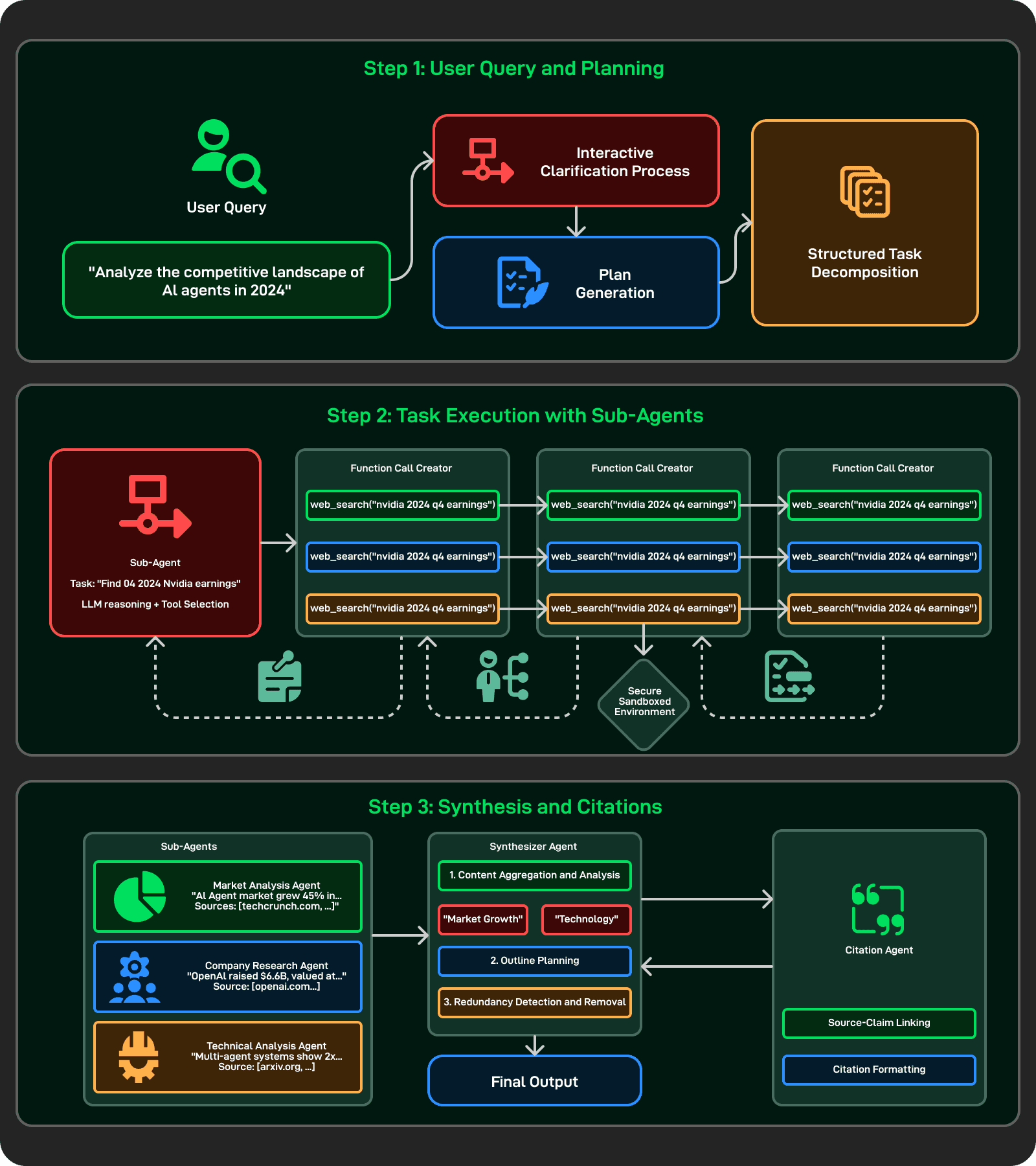
  • Build and deploy a deep research agent with web search and reasoning
  • Run models locally on your own machine

Understand how LLMs actually work

  • Follow the full path from raw data to working chatbot
  • Understand pre-training, SFT, and RLHF in plain English
  • Compare models like GPT, DeepSeek, Qwen, and Gemma

Master context engineering

  • Apply few-shot and chain-of-thought prompting
  • Write role-specific and user-context prompts
  • Understand how fine-tuning with adapters and LoRA works
  • Learn about context assembly and compaction

Build RAG pipelines that don't hallucinate

  • Parse, chunk, and index documents for retrieval
  • Build a semantic-based retrieval search with FAISS
  • Evaluate context relevance, faithfulness, and answer correctness

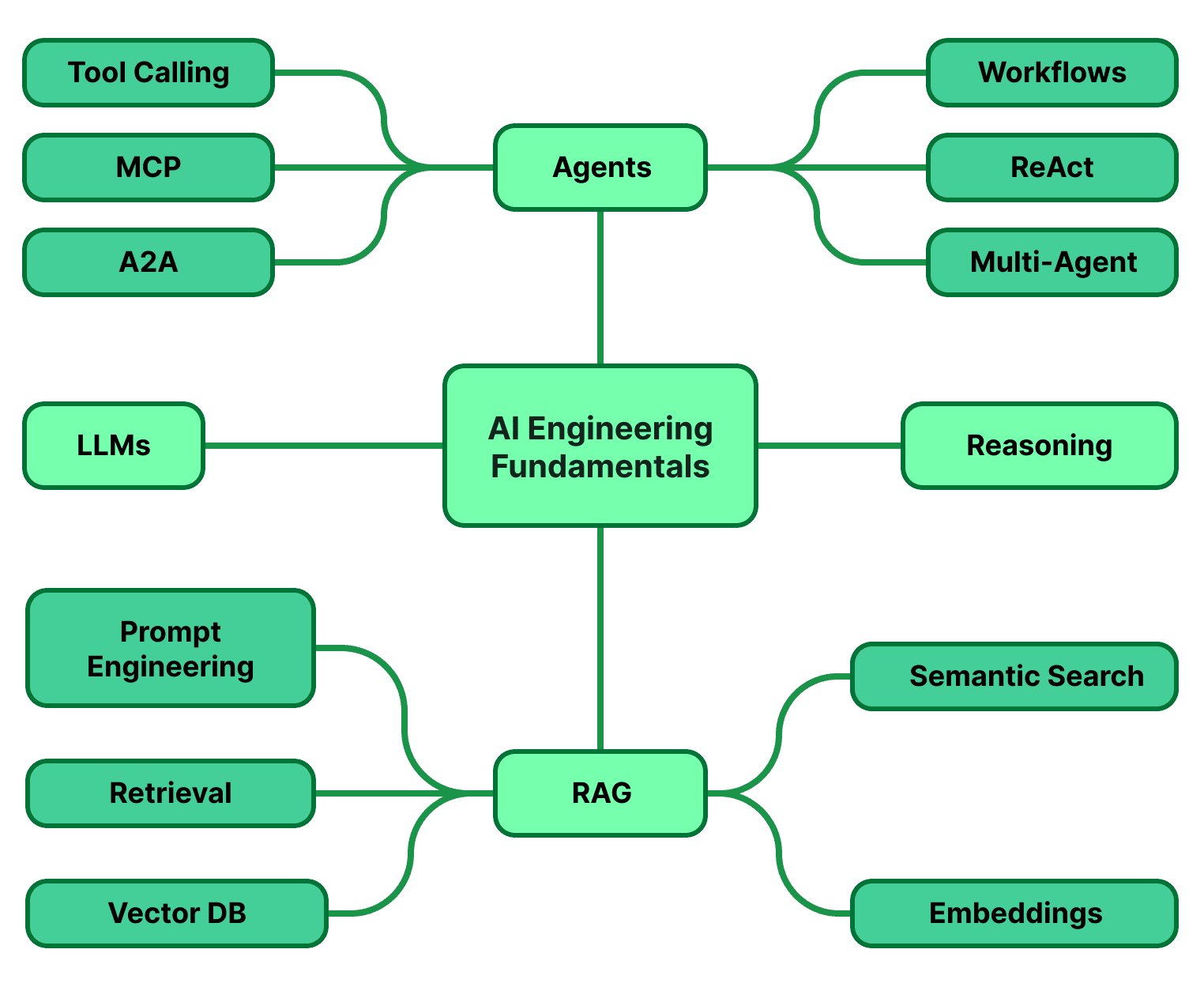
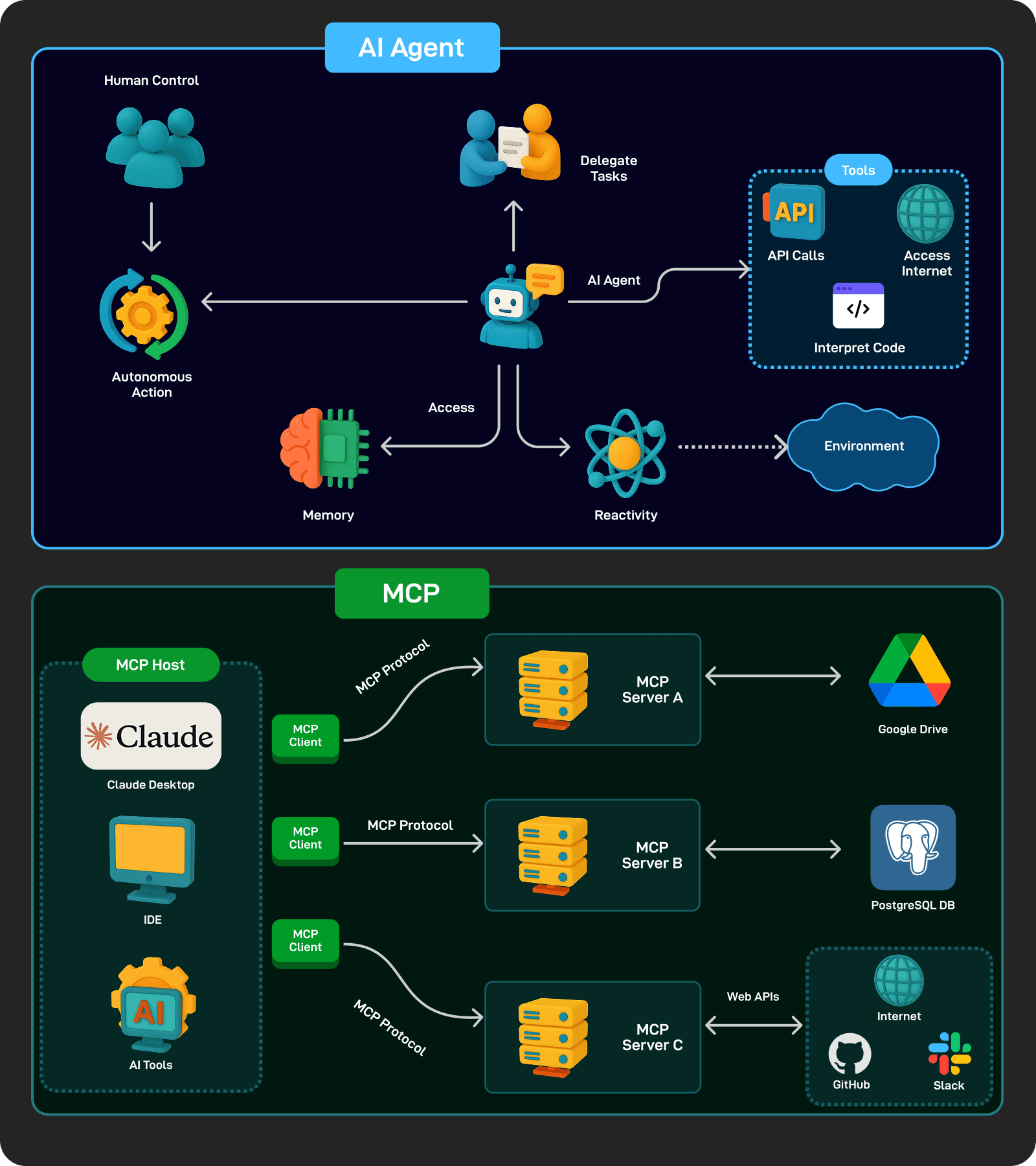
Design agents with MCP and your own tools

  • Connect agents to the web with tool calling
  • Apply patterns like routing, reflection, and ReAct
  • Evaluate agents and multi-agent systems

Understand thinking and reasoning models

  • Understand reasoning models like OpenAI's o family and DeepSeek-R1
  • Implement inference-time scaling techniques like parallel sampling and sequential revision
  • Learn training-time techniques to create reasoning models

Course Outline

Session 1

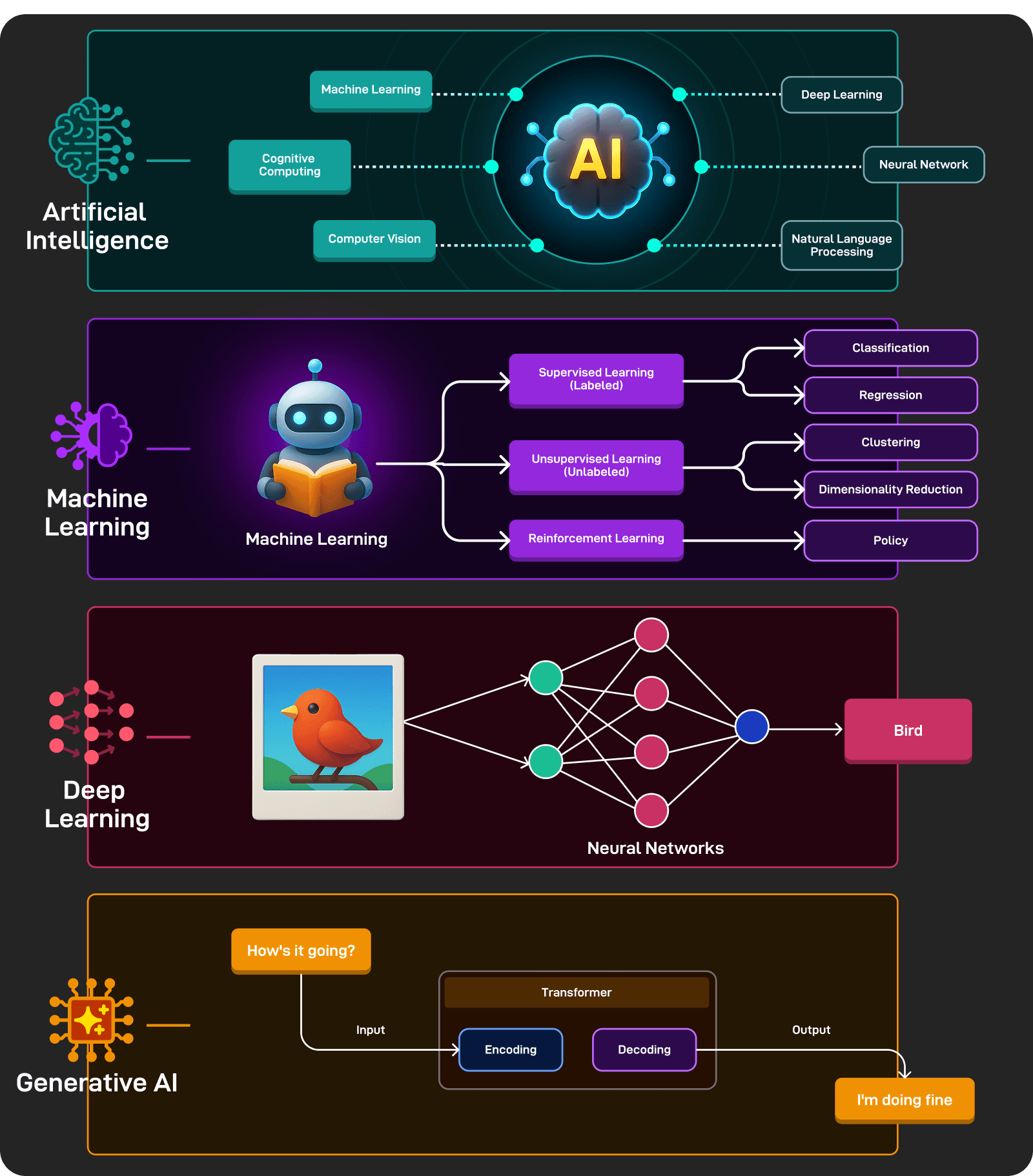
Build an LLM Playground

LLM Overview and Foundations

Pre-Training

  • Data collection (manual crawling, Common Crawl)
  • Data cleaning (RefinedWeb, Dolma, FineWeb)
  • Tokenization (e.g., BPE)
  • Architecture (neural networks, Transformers, GPT family, DeepSeek, Qwen, Gemma)

Text Generation (Decoding)

  • Greedy and beam search
  • Top-k and top-p sampling

Post-Training

  • SFT
  • RL and RLHF (verifiable tasks, reward models, PPO, etc.)

Evaluation

  • Traditional metrics
  • Task-specific benchmarks
  • Human evaluation and leaderboards

Chatbots' Overall Design

Build an LLM Playground diagram
Session 2

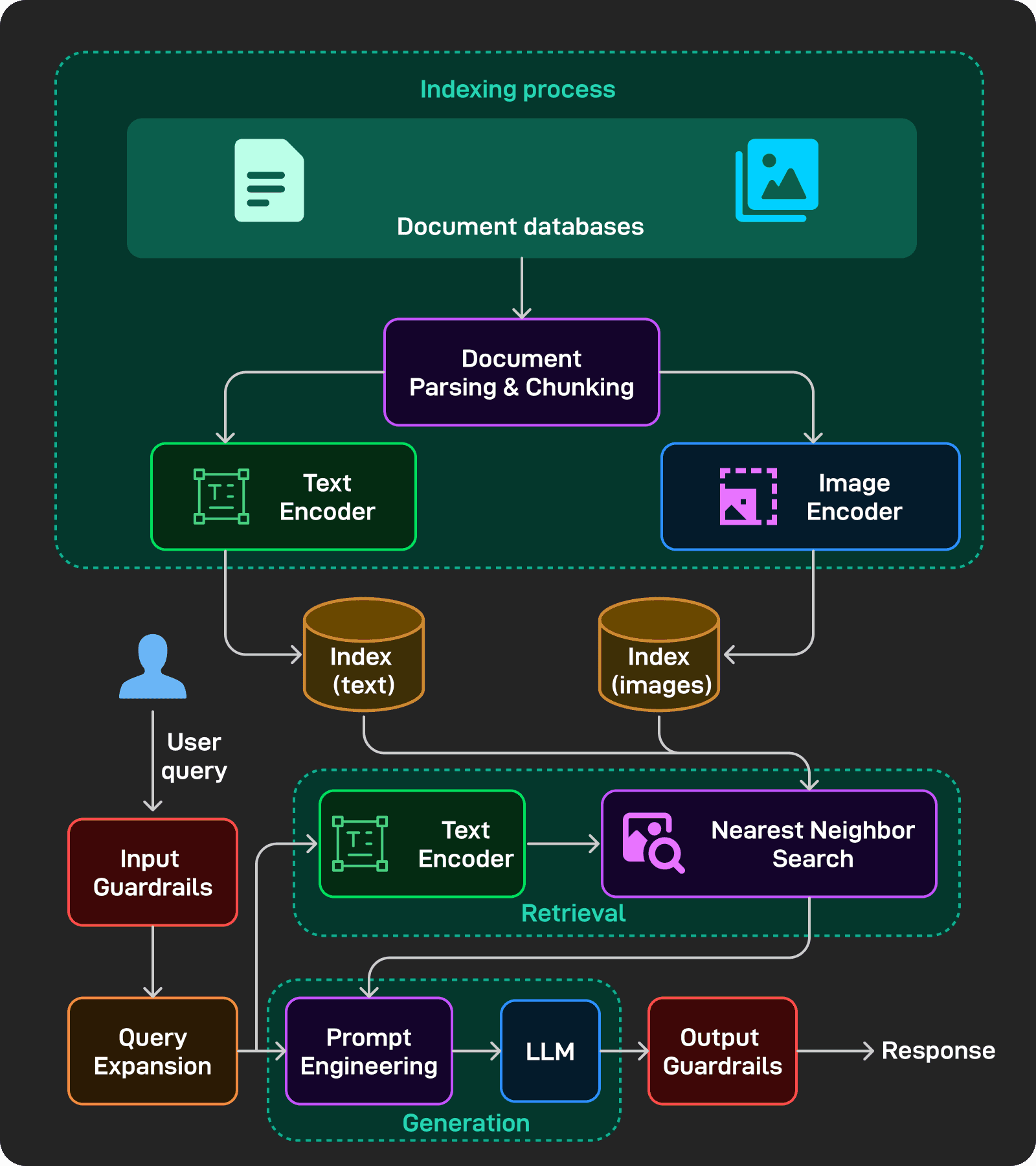
Build a Customer Support Chatbot

Overview of Adaptation Techniques

Fine-Tuning

  • Parameter-efficient fine-tuning (PEFT)
  • Adapters and LoRA

Prompt Engineering

  • Few-shot and zero-shot prompting
  • Chain-of-thought prompting
  • Role-specific and user-context prompting

RAG Overview

Retrieval

  • Document parsing (rule-based, AI-based) and chunking strategies
  • Indexing (keyword, full-text, knowledge-based, vector-based, embedding models)
  • Search methods (exact and approximate nearest neighbor)

Generation

  • Prompt engineering for RAG
  • RAFT: Training Technique for RAG
  • RAG Evaluation (context relevance, faithfulness, answer correctness)
  • RAG Overall Design
Build a Customer Support Chatbot diagram
Session 3

Build an Ask-the-Web Agent

Agents Overview

  • Agents vs. agentic systems vs. LLMs
  • Agency levels (e.g., workflows, multi-step agents)

Workflows

  • Prompt chaining
  • Routing
  • Parallelization (sectioning, voting)
  • Reflection
  • Orchestrator-worker

Tools

  • Tool calling
  • Tool formatting
  • Tool execution
  • MCP

Multi-Step Agents

  • Planning autonomy
  • ReAct
  • Reflexion, ReWOO, etc.
  • Tree search for agents

Multi-Agent Systems (challenges, use-cases, A2A protocol)

Agent Evaluation

Build an Ask-the-Web Agent diagram
Session 4

Build "Deep Research" Capability with Web Search and Reasoning Models

Reasoning and Thinking LLMs

  • Overview of reasoning models like DeepSeek-R1 and GPT-5 thinking

Inference-time Techniques

  • Inference-time scaling
  • CoT prompting
  • Parallel sampling
  • Sequential sampling
  • Tree of Thoughts (ToT)
  • Search against a verifier

Training-time Techniques

  • SFT on reasoning data (e.g., STaR)
  • Reinforcement learning with a verifier
  • Reward modeling (ORM, PRM)
  • Self-refinement
  • Internalizing search (e.g., Meta-CoT)

Local Deployment

Build "Deep Research" Capability with Web Search and Reasoning Models diagram
Optional Office Hours

Drop in with questions about the material or your project. Entirely optional.

Drop in with questions about the material or your project. Entirely optional. diagram

Meet Your Instructor

Ali Aminian

Ali Aminian

Ali Aminian is a best-selling author of multiple books on machine learning and generative AI. With over a decade of experience at leading tech companies, he has built AI systems that are intelligent, safe, and efficient. He also contributes to AI courses at Stanford University, combining technical expertise with a passion for teaching.

Adobe, Google, and Stanford

Prerequisites

  • You can follow the live sessions without knowing Python, but basic Python skills are needed to complete the assignments.

What You’ll Get

Live & Interactive Sessions

Learn directly from the instructor in real time. Ask questions, receive feedback, and stay engaged.

Peer Community

Stay motivated and accountable with a group of peers who are learning alongside you.

Certificate of Completion

Showcase your achievement on LinkedIn. Proof that you’ve leveled up with real-world skills.

The ByteByteGo Guarantee

If the membership isn’t the right fit, you can request a full refund within 7 days of purchase, as long as you haven’t completed a course.

FAQs

Every session is recorded, so you can catch up anytime that works for you.

The course typically requires around 4–7 hours per week, but you can adjust the pace to fit your schedule with recorded sessions.

Yes. Every session is recorded, so you can catch up anytime. Most of our students are working professionals, and the course is designed with that in mind.

Many members expense it through their company’s learning and development budget. We provide an invoice you can submit and an email template you can send to your manager. Get the email template →

Once you enroll, you’ll keep access to your cohort’s recordings and course materials even after the live sessions end, so you can revisit lessons anytime.

Reach out to live-courses@bytebytego.com. We’ll get back to you within 24 hours.